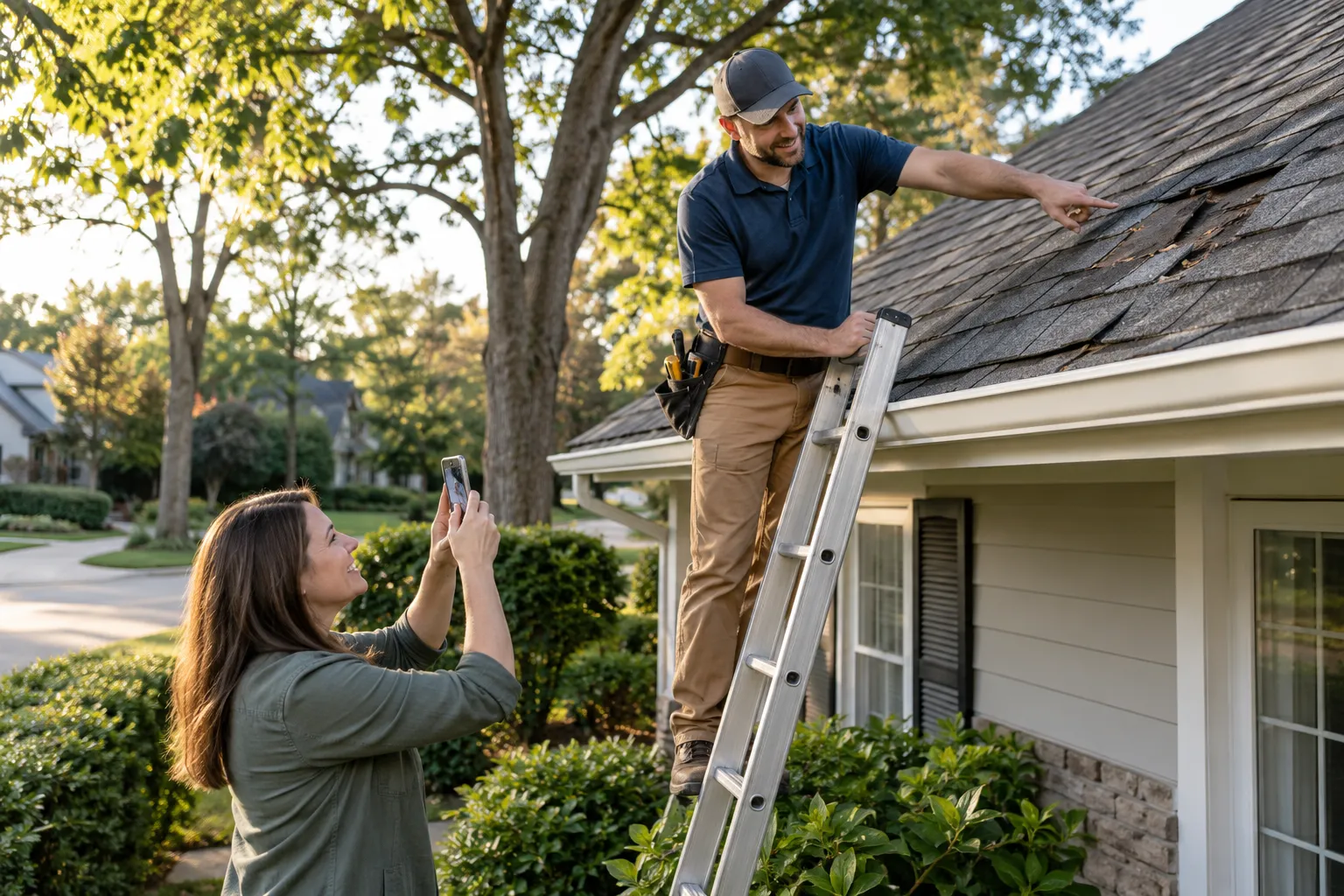
Finding a stain on the ceiling or shingles in the yard is worrying. You are not alone, and you do not have to figure it out by yourself. Casualemployers Roofing is a referral service. We do not climb roofs or do the repair. We help you get your facts in order and connect you with an independent provider in our network.
Here in the Gary area, roofs deal with deep frost, hot humid summers, hard thunderstorms and hail. Wear builds up quietly on older frame houses, bungalows and ranch homes. This page shows what to do first, what common repairs involve, what they may cost, and how to ask good questions before you sign anything.
Roof Leak? Start Here
Take a breath. Most leaks can be handled one step at a time. First, protect your home and your family. Then collect the facts. Then talk to a provider.
If water is dripping inside, move furniture and place a bucket under the drip. If a ceiling looks swollen or sagging, keep everyone out of that room. Never go up on a wet or icy roof yourself.
Get It on Paper: Photos and Notes
Good records make every later conversation easier. Before anything is moved or patched, gather these:
- Wide photos of each room with a stain, drip or bubble
- Close photos of damage you can see safely from the ground
- A note of the date, the weather and when you first noticed the problem
- Your roof's age, if you know it, and any past repair receipts
Save everything in one folder on your phone. If you plan to talk with your insurer, these notes help show what happened and when.
Why Small Leaks Grow
Water is patient. It follows rafters, soaks insulation and settles in places you cannot see. A small drip can turn into stained drywall, damp attic wood and mold over time.
In cold climates, water that seeps under shingles can turn to ice in deep frost. The ice expands and lifts the edges even more. Then summer heat and humidity can make hidden moisture worse. That is why a modest problem is worth checking soon.
Common Roof Repairs
Lifted or Missing Shingles
Wind and hail can loosen or tear shingles. A provider may replace the damaged pieces and reseal the area around them.
Flashing and Chimney Seams
Flashing is the metal that seals joints near chimneys, walls and valleys. When it bends or the sealant dries out, water finds a way in.
Vent Boots and Pipe Seals
Rubber collars around roof pipes crack with age. They are small parts, but they cause many leaks.
How a Roofer Finds the Leak
The wet spot on your ceiling is often not under the hole in the roof. A good provider usually checks the attic, follows the water trail, and then inspects the roof surface. They look at flashing, vents, nail lines and valleys. Some use moisture meters.
Ask them to show you photos of what they find. Seeing the problem yourself makes the quote easier to trust.
Emergency Roof Repair and Temporary Fixes
When a storm leaves an open hole, emergency roof repair often means a tarp or a temporary patch to hold things steady. Many providers can respond quickly, though availability varies. Request a callback to check provider availability in your area.
Keep the receipt for any temporary work. It is part of your paperwork. Do not nail down a tarp yourself on a slick roof. The risk is not worth it.
Storm Damage Repair and Hail
After a big thunderstorm, walk around the house from the ground. Look for dented gutters, scattered granules, torn shingles and branches on the roof. Take photos with the date showing.
Storm damage repair can be small or large. Some policies may cover sudden damage, so check your policy. Providers can often help document damage for a claim. If hail has hit the whole roof, the talk may shift toward hail damage roof replacement instead of patching.
Repair or Replace?
A repair makes sense when damage is limited and the rest of the roof is sound. Replacement may be worth discussing when leaks keep coming back, shingles curl across many slopes, or the roof is near the end of its life.
Ask the provider to explain both options in plain words. A fair answer includes why, what each costs, and what could go wrong with a patch.
Repairs on Different Roof Types
Asphalt shingles are the most common and the simplest to patch. Metal roofs need the right fasteners and sealants. Flat or low-slope sections on bungalows and additions rely on seams and membranes. Tile and slate need careful hands, since pieces can crack under foot.
Ask if the provider has worked on your roof type before.
Ask Before You Sign
A few questions go a long way:
- Will you give me a written quote that lists the work and materials?
- Is the work covered by a written warranty, and for how long?
- Do you carry liability insurance and workers' coverage?
- What happens if you find more damage once you start?
A good answer is clear and specific. You should never feel rushed.
Red Flags to Watch For
Be careful if someone knocks on your door after a storm and pushes you to sign today. Be wary of large cash payments up front, vague quotes, or a refusal to put things in writing. A provider who can't explain the problem simply may not understand it.
Choosing Local Roofing Contractors
Local roofing contractors know how frost, humidity and hail affect homes in your area. They also know local permit rules. Get at least two written quotes if you can, and compare what is included, not just the price.
Your Next Step
Casualemployers Roofing does not do the work. We connect you with an independent provider, and every decision stays with you. Start with your photos, then reach out when you are ready.
What's Included
Leak Source Inspection
A provider checks the attic and roof surface to trace where water is actually getting in.
Shingle Fixes
Damaged or lifted shingles are replaced and sealed so the area sheds water again.
Flashing and Seals
Worn flashing, vent boots and sealant around chimneys and pipes are reset or replaced where needed.
Storm Patching
After wind or hail, providers can often tarp openings and help document the damage for a claim.
What Roof Repairs Typically Cost
Prices change with roof type, height, access and how much damage there is. These are typical U.S. ranges only. Always ask for a written quote that lists the work, materials and any extra charges before you agree.
| Repair item | Typical range | Notes |
|---|---|---|
| Replace a few shingles | $150 – $500 | Small, single-area fix |
| Flashing repair | $200 – $800 | Chimneys, walls and valleys |
| Vent boot or pipe seal | $150 – $450 | Common small leak source |
| Temporary tarp or patch | $250 – $1,000 | Depends on size and access |
| Larger section repair | $800 – $3,000 | Decking may need work |
| Leak inspection visit | $100 – $400 | Often applied to the repair |
How It Works
Stay Safe, Document
Protect your home, keep off the roof, and take dated photos and notes of every problem.
Talk to a Provider
Request a callback or send the request form, and we connect you with a local provider in our network.
Review the Quote
Compare written quotes. Ask what is included, what the warranty covers and the timeline.
Approve the Work
Choose a provider, sign only when you are comfortable, and keep all records.
Why Call Casualemployers Roofing
Paperwork First
We help you organize photos, dates and notes before any conversation, so you feel prepared and clear.
Plain Guidance
Simple steps and everyday words help you know what to do and ask.
Local Providers
You are connected with independent providers who know your area's weather and housing.
You Decide
No pressure. You review quotes and choose whether to move forward.
Other Services
Need roof repair in Gary?
Tell us about your roof and where you are stuck. Request a callback to check provider availability, or send a request and a local provider will follow up.
No obligationRoof Repair FAQ
How do I know if my roof leak is serious?
Spreading stains, a sagging ceiling, dripping water or musty smells are signs to act soon. Small spots can still hide bigger problems. Take photos, protect your belongings, and ask a local provider to inspect the roof.
Will insurance pay for my roof repair?
Some policies may cover sudden damage, such as from a storm, but not wear and tear. Check your policy and talk with your insurer. Providers can often help document damage for a claim.
Can I fix a roof leak myself?
A bucket and a tarp from the ground side are about as far as most homeowners should go. Roofs are slippery and dangerous. Let a provider do the actual work.
Get in touch
Tell us about your roof and where you are stuck. Request a callback to check provider availability, or send a request and a local provider will follow up.
No obligation